Rethinking the Nat 1 in TTRPGs: Make Failure Meaningful
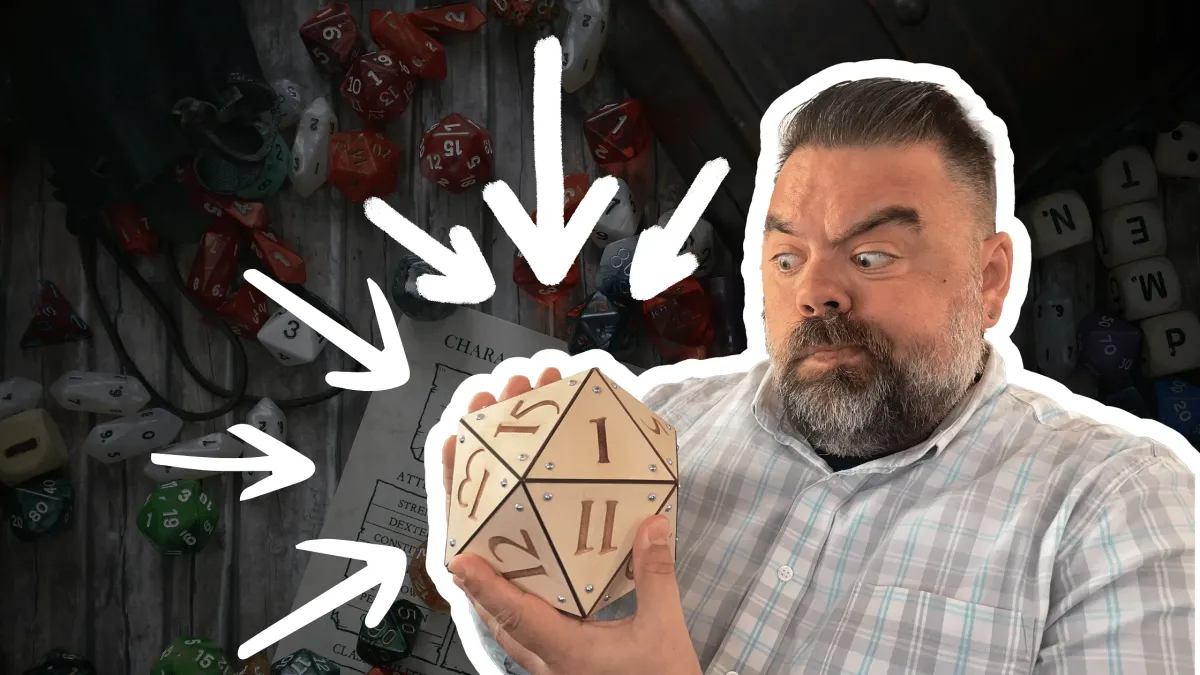
The Setup: A Rogue, a Roll, and a Rethink
Your party has been traveling for a month across uncharted woodlands. You were recruited for your heroics around the capital of these wild lands. Failure is not an option. The lord mayor knew you had the skills to chart the wilds and still come back alive.
Over your short life, your blades have been tested time and again. Each time, you’ve walked away with nothing more than scratches, while your enemies have fallen. You are Johnathan, the rogue.
The world sharpens when danger approaches-your pulse steady, your senses keen.
Suddenly, bandits jump out from the bushes. They’ve heard about the “heroes” passing through their territory. To them, that means treasure.
The sun has dipped behind the trees. Shadows stretch across the marked path you’ve nearly come to call home.
“Roll for initiative,” your GM says, plainly.
Everyone at the table leans in, dice in hand.
You’re ready. You’ve trained for this. You win initiative. You describe your heirloom blade, passed down for generations, and how you lunge at the nearest bandit.
You roll.
“Nat 1! Ugh,” you groan.
And just like that, the energy at the table crashes.
The Shift: A New Way to Look at Failure
But what if we looked at things a little differently?
What if you came along for the journey?
Because here’s the thing: a failure in a tabletop roleplaying game doesn’t mean all is lost. It doesn’t mean you’re useless or the story is broken. What it does mean is opportunity-if you let it.
Failed rolls can deepen the fiction, reveal character flaws, or spark new directions.
In this blog post, we’re going to explore:
- A mindset shift away from perfectionism
- Narrative tools to reframe failure
- Real-game examples to inspire
- And how game masters and players can collaborate to make failure fun
By the end, you should have a fresh perspective on what it means to “fail” a roll.
The Problem with Perfection
Let’s talk about the Tiamat in the room.
Most of us see success as forward momentum-and failure as derailment. I get it. When I first started playing TTRPGs, I felt that way too.
In fact, I was spoiled. I played a Minotaur Paladin in D&D 5E-still one of the most powerful characters I’ve ever created. He didn’t last long; a single failed roll killed him off. But before that, I was a literal cow charging enemies and soaking up damage like a juggernaut. It felt amazing to be powerful.
In games that reward high rolls with big damage, failure can feel catastrophic.
Worse yet, a single low roll can feel like the start of a downward spiral. One bad roll leads to frustration. A second bad roll? Disengagement. Players become risk-averse. They chase the “sure thing” instead of making bold, creative choices.
And a lot of this comes from how we’re taught to think about failure-both in life and in games.
We’re not given the tools to deal with failure. We’re told it’s bad. That it’s wrong. That if you fail, you are a failure.
But that’s not true.
Innovation Is Built on Failure
Take the Wright brothers. Growing up near the Virginia/North Carolina border, I was surrounded by stories of their flight legacy. In fifth grade, we even visited the Outer Banks to stand where they took flight for the first time.
What we forget is how many times they failed before that historic day.They weren’t afraid of failure-because they understood that failure leads to learning.
And that’s what we need to teach our players too.
Redefining Failure as Opportunity
So how do we shift our mindset?
Let me introduce two ideas you may have heard before:
- Failing interestingly
- Failing forward
I’ve seen both in my classroom and around the game table.
Failing interestingly means taking that failed roll and making something narratively rich out of it. It’s not the end-it’s a twist.
Failing forward means the story doesn’t stop when you fail. Instead, the failure drives the plot in new, unexpected directions.
Neither of these ideas work if you’re only trying to “win” the game. But if you’re here for the story? They’re gold.
A Few Quick Examples
- You roll a failure mid-battle. Instead of nothing happening, you accidentally reveal a hidden flaw or fear-maybe even something tied to your backstory.
- Your sword slips from your grip and plummets off a bridge. Now what? Your fighter might discover a new path-maybe even a reason to become a monk.
- A failed persuasion check causes tension that reveals a party rift. That friction drives character growth, not just conflict.
Some systems, like Powered by the Apocalypse, build this in. When you fail, the world reacts. Things get more complicated. And that’s not just okay-it’s good game design.
Every botched roll might just be a hidden story hook, waiting to be pulled.
Table Culture: Encouraging Failure-Friendly Play
As game masters, one of the best things we can do is reward narrative engagement with failure.
When something doesn’t go as planned, give your players spotlight time. Encourage them to lean into the moment. Make it dramatic. Make it awkward. Make it meaningful.
Do it often enough, and your players will stop fearing failure-and start looking forward to it.
Try This: Reward Complications
The Cypher System does this beautifully with GM Intrusions. When the GM complicates a situation, the player gets 2 XP. One they keep. One they give to another player. Those XP are then used to level up, gain abilities, or unlock cool features.
It’s simple: narrative risk becomes mechanical reward.
Ask yourself: in your own system, can you offer something like that? A reroll token? An inspiration point? A narrative boon?
When players know that failure doesn’t just mean “nothing happens,” but instead opens a door to new outcomes, your table becomes braver, bolder, and infinitely more fun.
Conclusion: Embrace the Nat 1
The next time you roll a critical failure, don’t just groan and move on.
Pause.
Ask: What just changed?
What does this reveal?
Where can this lead?
Because failure isn’t the end of the story.
It’s the twist that makes it unforgettable.
Want More?
- Share your favorite critical failure moment in the comments!
- Subscribe for more narrative GM tools, player mindset tips, and story-first game design talk.
- Follow us on Facebook, Bluesky and others for weekly TTRPG thoughts and behind-the-scenes prep.